Monday, April 28, 2014

An F-5, Far East Haulers, Some Vigis, and They Weren't All Warplanes


When Is It Obsolete?

The latest and the greatest. The best one out there. Light years ahead of anything that went before. The new industry standard. And the beat goes on. It's inevitable that new kits, using good research (unfortunately not always a given) and the latest in tool-making technology, will surpass existing kits of any flavor, especially old ones. Progress marches on, and even the short-run guys now have the ability to provide us with kits that eclipse the very best mainstream models of the 80s and, occasionally, the 90s as well. It seems like every new offering that hits the shelves is a thing of wonder, the best ever. We'll even agree with that, mostly.

What we don't agree with, mostly, is the notion that the new wunderkit that just came out has immediately made everything that came before obsolete and not worth having. Let's discuss a couple of cases in point.

Case in Point The First is the Eduard Fw190 family. Scale modelers were very nearly orgasmic when the kit first appeared. It had (and still has) a finesse of detail that has rarely been matched in the several years since its initial release, lots of optional parts, and loads of detail to boot, but it's also got a flawed blown canopy, an inaccurate cowling, inaccurate cowl vents, and a vertical stab that's too thick. It's still a fine kit and looks great on the shelf but it's a finicky build and needs a little TLC if you want it to look right. The somewhat older Hasegawa Fw190 offerings are easier to build and considerably more accurate in most regards, so in this case newer isn't better.

Case in Point The Second is the Tamiya P-47 in any of its iterations. It's highly accurate and is a shake and  bake proposition to build; if you can manage to gome up one of these you might want to consider a different hobby. That said, I've got several friends who've got a thing for the "Jug" and build a lot of them in consequence. One of the kits they use is the 1970s-vintage Monogram P-47D in either of its variants. Yes, it's got raised panel lines and yes; the interior is too shallow. Sandpaper and a scribing tool can take care of those panel lines, and the aftermarket is useful in this instance if you want to fix the cockpit (and you really should do that). The Monogram kit is old but gives a fine representation of a P-47 if you know what you're doing which is especially useful, from a financial standpoint if no other, if you happen to be building a lot of them so you can illustrate a variety of markings.

We could go stay on this topic forever, citing Hasegawa vs Tamiya A6Ms, Eduard Spitfires vs Anybody Else's Spitfires, and on and on it goes. Nowadays newer often is better, but we'd like to offer some food for thought in that regard.

There's a new family of 1/48th scale round-winged Messerschmitts on the the imminent horizon courtesy of our friends at Eduard, and the buzz on the street says they're the bomb diggedy. From what we've seen of test shot photos that doesn't seem to be too far from the truth, even if we all were fooled by their Wurger once upon a time, but that doesn't mean that our Zvesda or Hasegawa kits need to hit the clearance tables at the next contest---they're still viable kits and can build into gorgeous replicas if you've got a mind to do that. The Hasegawa A6M family is another case in point. The newer Tamiya offerings of the same aircraft are demonstrably better, but I've got both sitting side by side on the shelf (10+ of the Hasegawa and a couple of the Tamiya) and the Hase kits look just fine to me, thank you very much.

We could go on and on with this concept but we honestly don't need to. Some of the older kits are still pretty darned good and can be spectacular with just a little work. Some are still the Only Game in Town (the Monogram F-100D comes to mind here) in spite of newer kits and are worth the pain incurred when we build them. Some, as is to be expected in this hobby, are junk, always were and always will be; we've seen some masterfully-built junk kits too, although that's a topic for another day.

The point we're trying to make is that you don't have to build the brand spanking new, hi-tech whatever-it-is to be able to construct a well-built and accurate scale model. You can actually get there from here if you want to, which in our world means you can build something that's less than cutting edge and still end up with a fine scale model. At the end of the day the results of your efforts are in your hands; a whiz-bang wunderkit will help tremendously, especially if you're still developing your basic skills, but often times the older kits can be made to work just fine. (And sometimes they can't be, but you'll figure out which ones are worth the effort pretty quickly, we think.) We're modelers, right?

And the beat goes on...

Recce Bird

Photo recon has been a key component of air warfare since the beginnings of military aviation. Highly useful during The Great War, the operation was expanded in the 1920s and 1930s. The Second World War saw a tremendous expansion of the mission, which has only grown more important since the conclusion of that conflict. As a small tribute to that importance, we're going to start off today's adventure with a couple of lesser-known shots of one of the key photo ships of WW2; the Lockheed F-5.

Lockheed's F-4 and F-5 photo recon variants of the P-38 Lightning served with a number of units, and in all theaters in which the United States was engaged. This particular example is an F-5B from one of the lesser known 5th AF units, the 25th PRS. Constituted on 6 February 1943 and activated on the 9th of the same month, the unit saw action in New Guinea and the Philippines, and was awarded both the Distinguished Unit Citation and the Presidential Unit Citation for its service over the latter. The mission was un-sung but highly necessary, and the 25th performed it well.   National Archives via Rocker Collection

The 28th PRS also stood up in February of 1943, also saw action in New Guinea and the Philippines and, in common with the 25th PRS, receiving both the DUC and the PUC for action in the Philippines. 42-68225 was built as an F-5B-1-LO and carries the name "Stinky" and an emblem (which is not that of the 26th PRS) on her port cowling, but we don't know anything more about her. Comments are welcomed!  National Archives via Rocker Collection

Thanks as always to Bobby Rocker for sharing his collection with us.

Japan Was a Humming Place in the 50s

Post-War Japan was a busy place for the USAF. Even though it was somewhat of a backwater when compared to American involvement in Europe, several combat wings were kept in the islands in case of conflict with increasingly aggressive forces on the Asian mainland. The Korean War proved the concept to be a wise one, and the United States has maintained bases there ever since, albeit on a significantly reduced scale.

When most of us think of American activity in post-war Japan we tend to think of fighters, fighter bombers, and light attack aircraft, but transports were, and have remained, a significant part of the story. The photographs you are about to see were taken at Haneda Airport in Japan during the mid and late-1950s, and illustrate a not-particularly-glamorous side of air operations in the Far East. Keep in mind as you view these images that the combat operations of the Korean War, and any other operations both prior and subsequent, could not have taken place without a viable logistics component. They also served...

42-72378, built as a C-54B-1-DC and flying with Cal Eastern under contract as N227A, sits on the ground at Haneda during the mid-50s. Civilian contractors have long provided logistics assets to the Air Force, and the lettering on the fuel truck in the background and the USAF-marked C-54 in the hangar on the far left pretty much define the operation. She spent most of her life in the Far East and was finally written off in 1963.  USAF via Mark Morgan

 Perhaps more to be expected on an American ramp in Japan than 42-72378, 44-9044, a C-54E-1-DO assigned to the 99th ATS, is hard down for maintenance at Haneda. Her markings are pretty, and are highly typical of the transports belonging to MATS during the time period. 9044 was a survivor, lasting in USAF service until 1973.   USAF via Mark Morgan

We aren't at all certain what's going on here, although the lack of frantic activity would tend to point towards a drill or exercise of some sort. 44-9047, the C-54E-1-DO in the foreground, spent a fair amount of time in the far east, finally being retired and flown to the storage and disposition facility at Davis Monthan AFB in 1969. She lasted longer than most in active service, a tribute to her sound design and built quality.   USAF via Mark Morgan

If you flew from the States to Japan any time during the 1950s or 1960s, there's a fair chance you made at least part of the journey on a PanAm clipper. In this evocative shot "Clipper Derby", registered as N88958 but originally built as a C-54G-10-DO (45-0619) is sitting on the ramp at Haneda doing what she does best. She spent a long and productive life in the Far East before crashing to destruction in 1983.   USAF via Mark Morgan

Japan is a mountainous country, and most of the airfields lie close to the coastline. Haneda Airport was no exception, as well-illustrated by its elevation of 7 feet above sea level! The aircraft in the hangar is an R5D-4, BuNo 90408, of the Navy's Pacific Division MATS component. Built as 44-9138, a C-54E-10-DO, her ultimate fate is unknown. Modelers, take note of that control tower!  USAF via Mark Morgan

Haneda in its prime! This shot gives us an idea of the level of activity to be found at the installation during its heyday. Note how thoroughly filthy that ramp is; those oil stains are a trademark of the round engine. It's easy to overlook the contribution made by the guys who flew, and continue to fly, transport aircraft. We'd like to suggest that it's a mistake to do that.

Many thanks to Mark Morgan for these images of a time and place most of us never think about.

Why Can't We Get a Decent Kit

That particular whine/moan could apply to any number of American military aircraft we'd like to see decent kits of, but it applies in spades to North American Aviation's A3J/RA-5C family of attack and photo-recon aircraft. The Vigilante (referred to in the Fleet simply as the "Vigi") was one of those really neat, exceptionally interesting jets that fell through the cracks as far as the world's plastic kit manufacturers were concerned. The airplane first saw light in the Fleet as a straight-up attack bomber, the A3J, and was kitted twice in that guise, once by Monogram in 1959 (the kit we all remember because it had a spring-loaded weapon that could be ejected out the rear of the model in a rough simulation of the real aircraft's somewhat flawed weapons delivery methodology) and by Revell in 1961. Both kits were box scale and neither was particularly good in terms of replicating the real airplane, although the Monogram kit was a lot of fun to play with thanks to that projectile it squirted so energetically out of its posterior!

Time passed and Hasegawa released a simple but largely accurate 1/72nd scale kit of the "Vigi", an RA-5C,  in the late 60s, but it was a booger-bear to get together and not many ever saw the light of day as completed models. Airfix followed with their own model of the 5-Charlie variant in the early 70s and it was, to a small extent at least, an improvement on the Hasegawa offering, but very few of its parts fit together easily either and and it was still in 1/72nd scale when the actual airplane cried out for something a little bit larger. We weren't getting anywhere in any screamin' hurry.

Those of us whose hearts beat faster at the thought of accurate 1/48th scale models were finally blessed with a kit of the Vigilante a few years ago when Trumpeter released a model of the RA-5C. Long awaited and eagerly sought, it turned out to be somewhat less of a true replica than a basis for a good model if the builder was ready to put a lot of work into the project. That Trumpeter RA-5C brings us right up to date, unfortunately, because there hasn't been anything better in the world of the type since its release and, dang the luck; it just isn't very good. A a lot of people really wanted a decent "Vigi" kit, but they didn't get it. Why do they want that, you might reasonably ask yourself? Well, folks; if you aren't already an RA-5C aficionado, then take a look at the photos you see below. Do you want a decent kit now? We sure do!

The date is May of 1969, and 150832 from RVAH-13 is taxiing to the bow after recovery. She's big, she's clean (no gasbags, although she could certainly carry them), and she's FAST. The RA-5C was a world-beater when it first went into service, and was still a capable airframe when it was retired. Originally built as an A3J-3P, 832 was a survivor, being retired in 1971. Not all of the "Vigi" fleet was that lucky.  PH1 Bartel via Navy Photographic Center


This "Vigi" was from Enterprise's RVAH-6 and was photographed over the Pacific in June of 1969. Those puffy white clouds are pretty, but the "Vigi" would spend a great deal of the 1960s flying through clouds that weren't nearly so benign in the skies of North Vietnam.  Isham Collection

The RA-5C was a big honkin' airplane, which gave it substantial amounts of surface area for applying squadron markings. One of the more colorful schemes was that carried by RVAH-7 off the Forrestal during the 1970s. It's markings like these that make us wish for a decent kit of the airplane, although we're far more likely to see yet another Spitfire before that happens. The model companies tend to go where the money lives, and the money doesn't live anywhere near the "Vigi".  Pity...   B Trombecky via Buchanan

Most people think of Marty Isham as Mister Air Defense Command, and he certainly lives up to that title. There was a time, however, long ago and somewhat far away, when Marty would actually photograph airplanes from that other service too. 149277 from RVAH-1 was apparently experiencing what some folks might call "issues" when Marty shot this image back in the late 60s. She ended up at DM in 1972, a sad and possibly premature end for a beautiful airplane.   Marty Isham

By the early 1970s the RA-5C was well-established on the airshow circuit, as demonstrated by this example from RVAH-12 sitting on the ground at NAS Corpus Christi. She's a little bit scruffy in places, and probably not too far away from the boneyard, but she still looks like the thoroughbred that she was.   Frank Garcia

Here's another variation of the markings carried by RVAH-7. 146702 was an early example of the type, originally built as an A3J-1 as were many of the "Vigis" that later became RA-5Cs. Note the paint treatment on her gear doors and her generally scruffy appearance. She's not nearly as badly weathered as most modelers would represent her, but there's no doubt she's been well used.   Friddell Collection

This is what a RVAH-7 "Vigi" looks like when it's clean. 156608 survived active duty to be displayed at NAS Memphis after her retirement, but was still close to The Real Deal when this photograph was taken in May of 1980. Her gear doors have been removed, which gives us an excellent view of the way things work up in the gear wells. We don't know the circumstances of this shoot (Morgo?) but we suspect she's being readied for public display given her pristine paintwork.   Rick Morgan

Here's what the RA-5C looks like on the boat, with everything folded and the airplane ready to be taken down to the hangar deck. We suspect this photo was taken on a Tiger Cruise, although we're not entirely certain of that. What we do know is that she was assigned to RVAH-3 when David Balcer took her photo in September of 1978. She went to MASDC the following year, where she was presumably scrapped out. A sad end...   David Balcer

Here's a sister ship, 156632, taxiing on the boat. The photo displays her squadron markings to good advantage, and the presence of the V1 division provides a sense of scale in regard to what was a very large carrier aircraft. She ended up on a pole at NAS Sanford, a proud reminder of Things That Once Were.   David Balcer

We probably should've run this photo before we ran the one immediately above, since it illustrates 304 immediately after she's trapped and prior to taxiing out, but we didn't. At the end of the day it really doesn't matter---it's a beautiful image of a classic aircraft in it's element and a fine way to end this essay. "Nuff said!   David Balcer

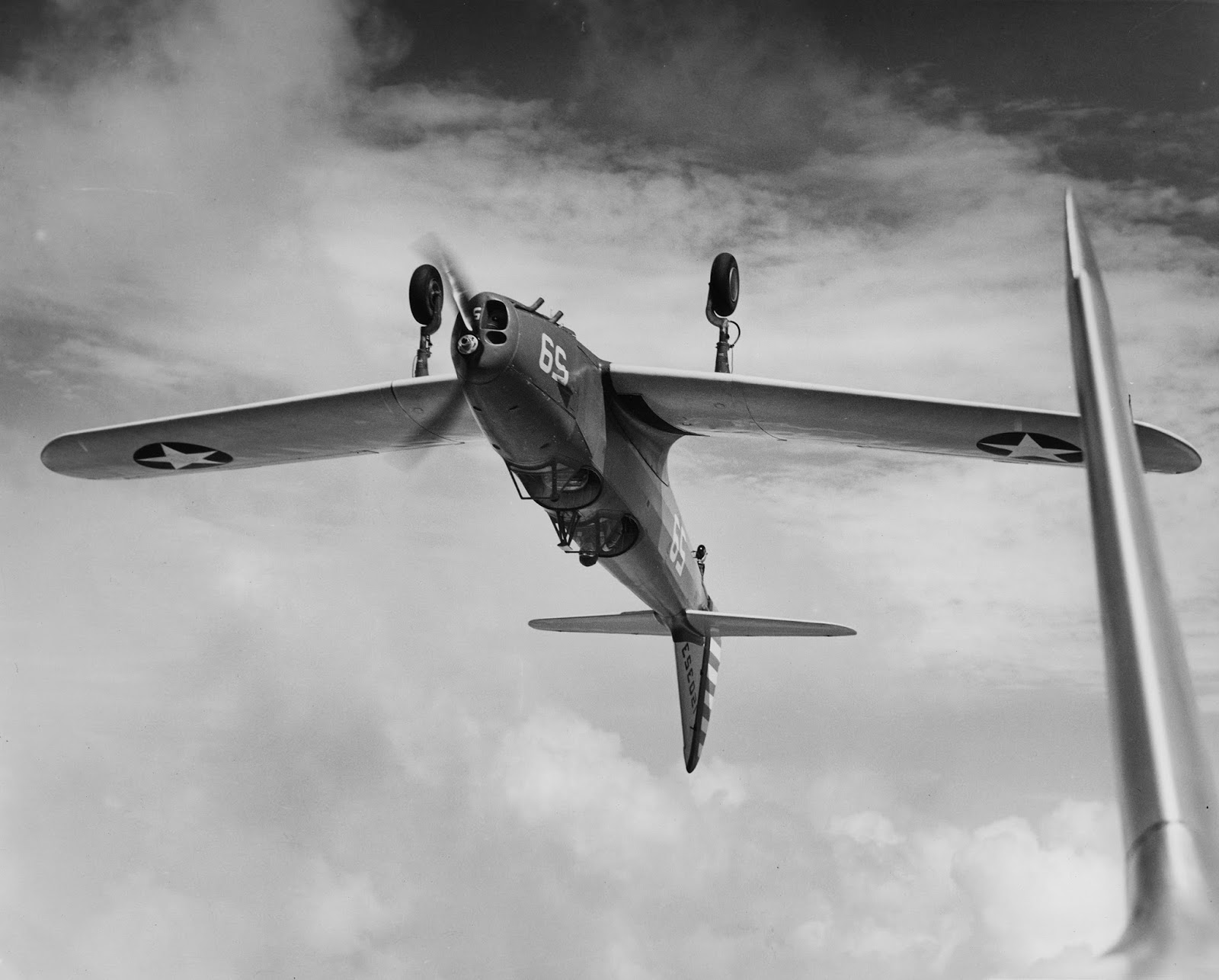
Now if we could only get some savvy kit manufacturer to get interested in the type! (Did I ever tell you about the "Vigi" that flew inverted over Haiphong during the late Southeast Asia War Games?)

Does Anybody Remember The Navion

The Second World War had just reached its bloody conclusion and the United States was suddenly transformed from the arsenal of democracy to a country with way too many military airplanes. The end of the war left America's defense industry with enormous capacity and nothing to use it on, which in turn led several of the country's premier aircraft manufacturers to venture off into other directions. Some were as seemingly unrelated to aviation as Grumman's foray into the travel trailer business with their Gulfstream line (an attempt to keep skilled sheetmetal workers employed), while others ventured into the area that they knew best; building airplanes. In one case, that venture resulted in the design and manufacture of one of the classics of post-War aviation, the Navion.

Remember that old expression: "They just don't make them like that anymore"? It's true; they don't. The Navion led a brief life under its North American Aviation parent before the design was sold to Ryan in 1947, making the relatively few aircraft actually manufactured by North American somewhat rare. Ironically, the type managed to see limited military service as the L-17, but most enthusiasts are far more familiar with the civilian versions. It's enjoyed a rich life in the hands of America's private pilots and can still be readily seen at commercial airports, a lasting tribute to a solid design.   Greater St Louis Air and Space Museum via Mark Nankivil

Happy Snaps

We were stumbling around (sometimes we fumble around too, but today was a stumbling kind of day) looking for an appropriate candidate for our Happy Snaps department when we found not one but two images we thought appropriate for the project. Both are from Rick Morgan---let's take a look:

Passin' a little gas over the Pacific. The Prowler is from VAQ-139's Cougars, and both it and the KA-6D it's attached too were assigned to the "Connie's" Air Wing 14 when Rick took this photo in August of 1985 while his aircraft was waiting it's turn at the pump. Air-to-air refueling has been a hallmark of American military aviation since the end of the Second World War. This photo makes it look easy---sometimes it actually is.  Rick Morgan

But sometimes it isn't. This is a normal approach to the basket, taken from the ECMO 1 position in an EA-6B, and everything's as it should be. That's not always the case, though; imagine there's turbulence up there, or too much airspeed on the aircraft being tanked. Imaging that basket whipping into the windscreen. Imagine refueling at night, maybe in less than optimal weather. Most of us rarely think of such things but they're a daily part of the military aviator's life, most of which is filled with incipient danger no matter how glamorous it looks from the outside. It's not just a job...   Rick Morgan

The Relief Tube

A couple of issues ago we ran a B-25 piece in which we illustrated a truck that we thought might have been used for turret maintenance. It turns out we were close, but there was no cigar in sight! Let's let Jim Wogstad tell us about it:


I was just re-reading one of last years articles and happened to notice a tiny itsy bitsy error. The photo actually shows an E-5 Turret Trainer Truck. If you owned a copy of the "Bomb Book", you would have known that! The USAAF mounted all sorts of turrets on them. One mod even sported a Sperry ball turret on a special extended frame. Interesting, no?  Jim

Jim sent along a photo to illustrate the point, but it's in a format that's apparently unloved by the software that powers this blog so you don't get to see it today---phooey! There's a tiny private joke in Jim's correction---he's been working on what we're convinced will be the ultimate reference to American aviation ordnance and related items. Let's all encourage Jim to get that darned book into print soon so we can get a look at the turret trainer truck and all the other nifty stuff that resides in his collection too!

We don't often publish kudos here, since we presume that most of our readership likes what we're doing or they wouldn't be looking in on us, but every once in a while we get an especially kind comment on the publication. This is one of those:

Hi Phil, Everyone loves the Sabre, heh? You bet! Among my most treasured possessions is the Replica In Scale special F-86 issue with the orange cover and dozens of Sabre profiles all done by hand!! A watershed issue and your rightful claim for glory. Glad to know that you're still keeping on. Kind regards from Belgium, Quang 

Thanks for your kindness, Twangster! We're glad you enjoyed that Sabre issue and delighted that you're still with us as a reader!

And, as brief as it is, that's our Relief Tube for today. It coulda/probably shoulda been longer (Lord knows we've got the material to populate it with) but we're already far later than we should have been in getting this issue published, so we're going to go with this. Please continue to write to us ( replicainscale@yahoo.com ) if you're so inclined; we don't publish everything these days but we do read everything that's sent to us (unless it's spam) and reply to a great deal of it. What you think, and your corrections to what we think, is important, so keep those cards and letters coming!

That's it for this time, so we'll see you all another day.

Be good to your neighbor,
phil

Monday, March 17, 2014

Snoopers and Rag Draggers, Joe on The 'Canal, The 38th, Thankin' Frank, and Some Spooks


Heading Off a Relief Tube Entry at the Pass

Sometimes we do really bone-headed things around here; the Best Laid Plans, etc, etc. That was the case in this instance, when we completely gomed up (or, with the rag-draggers, simply didn't insert) the unit identifications for those A-26 photos you'll see below. If you're looking at this issue for the first time it really won't matter, so you can just pretend you never read this. If you did read it before you might want to read it again, because we corrected the photo captions which, in our minds, precludes any necessity for putting an additional correction here. Many thanks (and sincere apologies!) to John Horne for pointing out our errors!

Put a Little Love in Your Heart

We've all seen it. With any luck we haven't actually done it ourselves (or, more importantly, to others!), but we've all seen it in action far too many times. It's unkind. It's rude. It's arrogant. And it's entirely unnecessary to life as we know it.

What am I talking about this time, you might logically ask. What's got me up on my soapbox again, ranting and raving for all to see? Why, it's The Arrogant Internet Know-It-All, of course! You've seen it before (but hopefully not on these pages) and, unfortunately, you'll probably see it again. Let's discuss the situation.

In the pre-Internet world most publications had a letters-to-the-editor section so readers could write in with their comments or opinions on things a given periodical might have put into print. Back in those days letters got reviewed by an editor, who checked them over not only for grammatical and spelling errors but also for content and also, somewhere in the process of editing, chose which ones would find their way to ink on paper in the next issue. The Internet isn't like that, by and large, because a whole lot, maybe even most, of the e-zines and blogs out there allow their readership to voice their opinions by means of a forum of one sort or another, generally moderated by someone connected in some official manner with the site in question. Said moderator gets to be the referee, for want of a better term, and gets to try to keep things informative and relatively civil. Unfortunately, since there are generally a whole bunch of people writing in and just one or two moderators, things can sometimes go off in a direction entirely unintended by the staff of said site.

On any given day I probably drop in on a half-dozen or so modeling-related boards to see what's going on in the polystyrene world. It's a good way to learn new techniques, gain a fresh insight into things I thought I had figured out a long time ago, and just have some enjoyable time reading the comments of people I don't actually know but have come to look on as electronic friends because I enjoy reading what they write. I think that's what the folks who put forums on their sites intended when they did it, and I applaud their efforts and good intentions.

Unfortunately, those good intentions are often run aground by the efforts of a class of folks we'll call The Dreaded Internet Experts, those people who know everything and want to make certain that you, along with everyone else, know that they know it. Their expression of thought ranges from comments as simple as "we discussed that 3 pages ago (Weren't you paying attention, Dummy?!)" to out-and-out accusations of whatever it is the accusations are about this time ("Hey, everybody---look at me! I'm really smart but that guy's a moron!").

Here's the deal, or at least the deal as I see it. People who don't know things write into those web forums to ask questions so they can learn. Sometimes the questions don't seem too well-founded, it's true, but it's fair to presume that somebody didn't know something and thought somebody on whatever-forum-they're-reading could help them with the answer. That seems fair enough to me, and I honestly can't see belittling such people or jumping down their throats when they commit the unforgivable transgression of asking a "dumb" question; all that sort of thing does is make the person making the comment look bad in the eyes of their peers. They might be right in what they're saying, and their comment might be well-founded, but it's also rude. It's probably better to not say anything than to jump down the throat of a total stranger because they didn't know the answer to something.

Why, you might say, does this matter? To me the answer is simple: Every year we get more and better kits, and decals, and references, and on and on it goes, but a lot of that is because those of us who grew up with plastic models have aged to the point where we can afford at least some of those increasingly expensive toys. Sooner or later we'll age to the point where we can't see well enough to model anymore, or no longer have the eye-to-hand coordination that's necessary for such things. One way or another we're all going to leave the hobby, and I'm not convinced there are all that many people coming up who care about plastic scale modeling the way a lot of us do. With that as a premise, why would we want to risk driving people away from the hobby because we can't control our egos on an electronic forum? Wouldn't we want to help those folks out so they'll become more involved, and maybe bring in a friend or two with them? Wouldn't increasing numbers give us a shot a more new kits, and references, and so on and so forth, while we're still able to enjoy them?

I think there's an obvious lesson to be learned from all this, both in scale modeling and in the other aspects of our lives. A question you don't like doesn't have to be a challenge, and an answer you don't agree with doesn't have to be an affront to your very being. It might be easier to just try to get along with the other guy.

I rest my case.

Some Different Invaders

Some things are seminal in our lives; people, places, things, or events that bend a twig and shape a future. For us, one of those seminal instances was a Thing, the Monogram B-26 Invader (Kit # P6 or PA6 depending on how old you are). "Lil Nell", as was boldly emblazoned on its nose, was The Big M's first plastic model airplane kit, originally appearing in 1955 and staying in production until 1970 or so. We built it for the first time in 1957 and were, as were so many kids of the 50s, immediately stricken by the airplane's appearance. That model triggered a personal love affair with the A-26 that's lasted to this very day. We're guessing that a lot of our readers share the same passion, and maybe even for the same reason. There's a caveat, though. There always is.

In this case the caveat is the mission the airplane was used for; the A-26 (later B-26, after Martin's medium bomber of the same designation had left the inventory shortly after the conclusion of the Second World War) being primarily thought of as an attack aircraft and bomber. That was, after all, its designed role, and it's how the vast majority of them served in three wars. That's why those of us with a specific seniority on life fell in love with that Monogram kit, right? Right!

OK then, consider this point, if you will. The Invader served from the waning days of WW2 right up through the greater part of the Vietnam War as a light bomber, an attack bomber, and an interdiction platform, but the basic airframe was a versatile one that lent itself to tasks other than those we most often associate with the type. In later years, while in service with the ANG, it sprayed mosquitos over American cities and served as a fast VIP transport. From the end of the Second World War until the final days of its career it served as a target tug and, for a brief period of time during the Korean War, as an electronic warfare platform. Thanks once again to John Horne, we're going to spend a few minutes exploring those particular missions as they were flown by the Douglas A-26. Let us proceed:

Here's a fine example of a rag dragger. The aircraft is an A-26C-50-DT and is shown here during its target towing days with the USAF, while flying with Det 1 of the 4th TTS out of Larson AFB in Washington ca. 1953/54. Those black nacelles are fairly common on the A-26 family, serving to both reduce glare and hide all the gunk thrown off by the engines. She ended up a survivor on the American civil registry, a fate shared by a great many Invaders---you can thank those years as a target tug and hack for their survival.   Campbell via J Horne Collection

Target tugs tended to be extremely colorful in The Silver Air Force, as typified by this ramp shot of the 5th TTS' Det 1 at Sculthorp in 1955/56. It's interesting to note that there are three B-26s in this photo and they're all painted differently! Two are B-models and one is a Charlie; as a rag dragger it didn't matter whether the airplane had a gun nose or not.   Campbell via J Horne Collection

And here's a detail shot of the badge that's on the first bird in that ramp shot. It's American nose art at its best and we presume, but are not certain, that it's the squadron emblem for the 5th---our archives don't include target towing units! Reader comments are invited at replicainscale@yahoo.com .  Campbell via J Horne Collection

The next few shots will help explain why we're so impressed with John Horne's collection. These RB-26Cs (44-35825 and 44-35909) were assigned to the 11th TRS, 67th TRW, and were photographed on the ramp at Kimpo late in 1953, and were tasked with monitoring WarPac, Chinese, and North Korean gun laying radars. The paintwork is a little unusual on the closest of these aircraft; the propeller warning stripes and buzz numbers are outlined in white. Check out the lumps and bumps on those airplanes!   Bowlus via J Horne Collection

Here's a paint scheme you don't see every day!  The aircraft is 44-35555, also on the ramp in Kimpo late in 1953. She's wearing a white-trimmed prop warning stripe, a pair of gas bags trimmed in red, and silver trim on her aft nacelles! She's not festooned with the shapes found on some of the 11th's other aircraft, but that paintwork more than makes up for it!   Bowlus via J Horne Collection

How about a better view of that chin pod to end our essay with? "Snooper" pretty much sums up the mission of the 12th and does it with considerable humor. She's yet another RB-26C, and she posed for this portrait in late 1953, shortly before the cessation of hostilities. The natural metal prop hubs and blades are of interest, as are the details of the chin and ventral antennae covers---we'll publish a rundown of what they are in a later issue.     Marios via J Horne Collection

Before He Was a Governor

Joe Foss led a long and distinguished life, Governor of North Dakota, first president of the American Football League, president of the NRA, a general in the Air National Guard, and a broadcast announcer on television. Those accomplishments, taken all by themselves, would qualify him for lasting fame, but there's more to the story than that. Joe Foss was a Marine aviator during the Bad Old Days of 1942 and flew with VMF-121 out of Henderson Field on Guadalcanal. The 26 kills he achieved while there won him the Medal of Honor, while his stay in the Solomons gave him a case of malaria and a trip back to the States. He was back in the saddle again by 1944, commanding VMF-115 out of Emirau, where he relapsed into a second case of malaria. He was the Real Deal, an all-American boy doing his duty in a crummy war and thriving on the experience, and his exploits, both on and off the battlefield, are the stuff of legends.

Publicity photos don't get much more contrived than this one is; a stoic Joe Foss stands over an empty ammo can while a pair of Navy (not Marine) ordies show him what a belt of .50-cal looks like. The premise is a silly one at best, but it showed the folks back home what their boys were doing, even if the view was somewhat whimsical. America needed heroes in 1942, and Joe Foss was the genuine article, a skilled and capable aviator with exceptional gunnery skills and more than a small amount of intestinal fortitude to back it all up. We strongly suspect this photo was taken after his return to the ZI from the Solomons but it really doesn't matter; no amount of staged photography could diminish Joe's accomplishments.  Rocker Collection

Many thanks to Bobby Rocker once again, and a special thanks to the guys who stood up when the going was toughest. We owe them.

Gunship

That's not how North American Aviation's B-25 Mitchell started out, but by early 1943 the aircraft had morphed into a strafer of the highest order. The concept began with the operators in General George's air force, who required more punch than existing bombardment types could provide given the 5th Bomber Command's evolving mission as a low-level strike force. Those early field mods eventually led to the production of dedicated strafers straight off the production lines. The photos you're about to view chronicle a brief capsule of that evolution, with aircraft provided courtesy of the 405th BS, 38th BG.

A classic strafer! 41-12905 was a B-25C attached to the 405th BS of the 38th BG during 1943 and 1944. She was eventually written off in an accident but was in her prime when this photo was taken---North American fabricated a number of gunship conversions and shipped them to the SWPAC, and this aircraft has had one installed. The C and D models weren't quite as impressive as the 8-gun purpose-built J-models that were to follow, but they were capable enough and could certainly get the job done, as the scoreboard on 905's nose attests.
J Watson Collection

Here's another view of a North American-kitted Mitchell from the 405th. The four-gun nose was perfectly adequate for the job, particularly when combined with the package guns mounted to the sides of the fuselage. In this form the B-25 was a superb destroyer of airfields and a ship killer without equal. Note the dragon's head and sharkmouth presentation on this aircraft and compare it to that of 12905 above. They were all hand-painted and no two were exactly alike.   J Watson Collection

Somewhere along the way somebody decided that if machine guns in the nose were good, a cannon would be that much better. The idea led to the installation of a 75mm M4 howitzer in the nose, loaded by the navigator. It must have seemed like a good idea at the time, but in the reality of combat operations it was a dismal failure. Slow to load and difficult to aim, the gun was removed early on and replaced by a pair of .50 caliber machine guns firing through a modified cannon port, weapons that were far more useful in the B-25's strafer role. This aircraft is a B-25H and is shown on the ramp on a typical SWPAC airfield. The post visible above the nose of the aircraft is part of the aiming system for the guns---we hesitate to call it a gun sight. In this configuration the G and H-models were every bit as effective as their more "normal" brethren in combat.  J Watson Collection

Coming home! 12905 settles in after an early 1944 mission in the Philippines, with no apparent combat damage. In theory things were easier by 1944, but the 5th's strafers fought a hard war and took losses right up until the end. This photo makes it all look easy. It wasn't.   J Watson Collection

Such a Simple Idea

As you've all been reminded far more times than you would like, I've been building plastic model airplanes most of my life. My progression of skill sets has probably been the one most of you have followed as well; glue-smeared rough assemblages of parts replaced by tidier assemblages of parts, which in turn were replaced by tidy assemblages of puttied and sanded parts. Those puttied and sanded assemblages, which more or less resembled an airplane to one extent or another prior to painting were, at one point in our modeling careers, the arrival point, the goal, the end game. Everybody knew, and most people still know, that you build up a model, than paint it, decal it, weather it, and put it on the shelf. That's the way you do it (although you don't get money or chicks for free). That's the way I used to do it too, but not any more. I've had an epiphany, if you will, and I'd like to share it with you.

It all started during a visit to Frank Emmett's place a couple of years ago. The spouses were safely ensconced in Frank's living room doing whatever it is spouses do when they're ensconced someplace, while he and I were back in his airplane room talking about, what else---airplanes---when I noticed Frank's project of the moment sitting there on his workbench. At this remove I honestly can't remember what he was building, although that really doesn't matter. What does matter is the way he was building it.

Remember that part way up there in the first paragraph where I said that we all learned to build up a mostly homogeneous airframe before we began to paint and decal. Well folks, Frank wasn't doing it that way. Nope; he had a fuselage all built up, painted and decalled and sitting next to a wing assembly in the same approximate condition. I noticed what he was doing and the light bulb went on!

Back in those prehistoric times us old guys sometimes refer to as "The Day" it was necessary to build up a kit into something that more-or-less represented the finished model before we could begin any sort of finishing processes such as painting. It was a defense mechanism, since most of those older kits didn't fit worth a damn and a fair amount of sanding and puttying, followed by even more sanding and puttying, was pretty much the order of the day. That all began to change back in the 90s, and today's modern kits, the mainstream ones anyway, generally go together pretty darned well. Think about that for a minute. How many kit reviews have you read where the writer said he or she didn't use any putty and did very little sanding? The answer, increasingly, is A Lot, and that answer takes us to my epiphany. Think about it for a minute---it's often easier to paint and decal a fuselage by itself, without other big pieces stuck to it to get in the way, and since most of the big pieces on a great many kits now go together with little need for bodywork, the next step is obvious: Build the thing in modules!


Here's a prime example of what we're talking about. Yes, you've seen some variation of this photo once before, but you get to see it again because it proves the point. The kit is the Hasegawa 1/32nd scale Ki-44, a fairly recent kit that fits together like the proverbial glove. That fuselage was done as an assembly and then painted with a Tamiya rattle can and decalled, after which the horizontal stabs were added. The wings were done the same way, although the Hinomarus and Home Defense bands were masked and painted on both the fuselage and the wings---no stickies there! Painting those insignia, plus the red tail and the anti-glare panels, would have been a royal pain in the patootie if the airplane was all put together in one big honkin' piece, but doing it this way turned what could have become a major hassle into a cakewalk. Doing the model in subassemblies made the project an easy one. Think about it for a minute---if you don't need putty on a particular kit before you paint it, why would you need to be concerned about addressing seams afterwards? Can you spell Brilliant? (We're describing Frank, not me...)

And here's the same approach taken on an Eduard Bf109E. Some reviewers have given this kit a bad rap for fit, but it just ain't so! If you read the instructions and exercise a little basic care the kit will simply fall together. You need to keep in mind that the technique only works if the kit's pieces fit together on natural panel lines copied from the real aircraft, but if you've got a kit that does that you're Golden! This is such a simple idea. Why didn't we hit on it before now? Shazbot!

The point is this: You will have to be extremely careful doing your final assembly and be prepared (and brave enough) to do a little touch-up if necessary once everything's together, but you'd probably have to do that anyway. It's a given in our hobby. Not every kit is well enough engineered to allow you to use this technique, but most of the newer ones are. A great many of Hasegawa's kits, as well as Tamiya's and Eduard's, tend to fall together without much hassle if you're careful when you do your initial assembly, which makes the technique viable in the extreme. You probably won't want to try it with very many of the current crop of Chinese kits (although they're getting better with every new release) and you definitely can't do it with the short-run stuff, but there are a whole lot of kits out there where the technique works just fine. You really ought to give it a try some day. You just might be amazed at how things turn out.

Oh yeah; we'll tell Frank you said thank you!

Scary Airplanes

Or not, but any way you cut it it's a fact that the Late Lamented McDonnell Aircraft Company/McDonnell Douglas used to name their fighters after ghostly apparitions and other scary things. We're big fans of Things Naval around here, and therefore fans of those McAir fighters by default. That makes it an easy jump into today's last photo essay. There's no rational here except that Mark Nankivil recently sent in a couple of really neat photos and we wanted an excuse to share them with you!

It was big (really big) and it was loud, and the guys who flew it were lucky indeed that they never had to go to war in it, but McDonnell's F3H Demon was also one seriously good looking airplane, as illustrated by this ramp full of VF-131 F3H-2s. We think that's a section from VF-31 parked in the background but aren't 100% certain and will patiently wait for the e-mails confirming or correcting same! That address is replicainscale@yahoo.com .   Greater St Louis Air and Space Museum via Mark Nankivil

Unlike a great many of its late 50s/early 60s contemporaries, the Demon spent quite a bit of time on the boat, and we're sure you've all heard the term "bolter" as applied to carrier operations. This photo shows what one looks like from the V-1 Division's perspective. A bolter was an event to be remembered in the early jets thanks to a distinct lack of available thrust---even though the F3H had an afterburner this sort of shenanigan was guaranteed to get the driver's attention, as well as that of the guys in the catwalk. Note that on this airplane, at least, the interior of the gear doors is solid Insignia Red in its glossy iteration. It's not just a job...   Greater St Louis Air and Space Museum via Mark Nankivil

The F3H came on line during the primordial days of the fully-operational air-to-air missile. This photo shows an early F3H-2M undergoing trials with AIM-7 Sparrows on the rails. Those early AIM-7s weren't particularly effective, but neither was the Demon. During those formative years of the missile-armed interceptor their value lay in the experience they provided to the NAV in terms of all-weather (sort-of) operations. They honestly weren't much, but they paved the way for Better Things.   Greater St Louis Air and Space Museum via Mark Nankivil

Here's one of those Better Things we mentioned up above. McDonnell got close with the F3H, but were severely handicapped by lack of an appropriate powerplant. The Demon's successor had no such issues, and it's safe to say that the company knocked one out of the park with the follow-on aircraft, the F4H-1 Phantom II. It was, to put it mildly, one of The Great Ones; an iconic aircraft that was designed for Fleet defense and ended up performing just about every mission that can be flown by a fighter. It was everything the Demon couldn't be, and more. It was the stuff of legend, but it owes a lot of its fame to its also-ran older brother. Fly Navy!   Greater St Louis Air and Space Museum via Mark Nankivil

Happy Snaps

Since we're already doing a Navy thing today, let's crank in a product from the Grumman Iron Works for our parting shot:

Rick Morgan took this evocative study of 161242 from VAQ-133 near Republic, Washington, in March of 1992. EA-6B replacement is underway as this is written, with final operations scheduled for 2015, but the EA-18G Growler has got some big shoes to fill. Those guys over in Bethpage knew how to build an airplane! Rick Morgan

The Relief Tube

It's been at least two issues since we last ran this part of the blog, so it's probably time to get back into the game. We're only going to run a couple of things this time since we're essentially playing catch-up, so without further ado:

A couple of issues ago we ran a photo of an A/F-18F submitted by Kolin Campbell and identified the place as being a cold, wintery one, probably because that's how the weather was around here. In fact we were about as wrong as wrong could be, as explained by Kolin:

Although the F/A-18F photo makes it appear cold out there, it sure wasn't! Photo was taken during the early summer, which at China Lake means hot. The white areas on the ground are desert minerals or salts. The 'lake' visible is Searles Lake, located near the town of Trona, CA. China Lake airfield is to the west, not visible in the photo. It can get cold in the winter, though. Kolin

Thanks, Kolin!

And finally (we told you this would be a short Relief Tube!), here's a photo to end the day with. It's from The Greater St Louis Air and Space Museum courtesy of Mark Nankivil, and we're running it in an unadulterated form (that means no watermark) as a special treat for our readers.

For the love of flying. 'Nuff said!    Greater St Louis Air and Space Museum via Mark Nankivil

And that's it for this issue. Be good to your neighbor and we'll meet again real soon!
phil

Sunday, March 2, 2014

Stickies for Your Jug, and Some Special Invaders


A Waste of Money?

Or, Why in the World Do We Buy All That Aftermarket, a Conundrum in Various Parts. That's right, Aftermarket; all those photo-etch sheets, resin bits, vacuum-formed transparencies, and other doohickeys that we all just can't seem to live without. It's a thriving and often helpful market that caters to the more advanced (read Not an Absolute Novice) scale modeler. The whole concept feeds into a notion that our hobby likes to call AMS, which is short for Advanced Modeler Syndrome but which could just as easily be known as Additional Model Stuff, which could also morph into AHUMS, or Additional and Highly Unnecessary Model Stuff. I fully realize that I'm flying right in the face of conventional scale modeling wisdom here, but stay with me for a moment if you will and I'll explain why I'd advance such a heresy.

Ever since there's been plastic scale modeling there's been an ongoing quest for better, more accurate kits. It's been a constant struggle since, with each passing year, technology has allowed the cutting of finer and more accurate molds (presuming, of course, that the data used to cut said molds was correct in the first place), which in turn resulted in better, more accurate kits. Still, the kit manufacturers could only do so much in the way of what they offered because tooling costs had to be kept reasonable in order to allow the production of kits that you and I could actually afford to buy. There was, still is, and probably always will be room for improvement, and that's where the aftermarket guys come in.

There are three different ways aftermarket serves our hobby. One is that of the correction set which, in theory at least, fixes known problems with a specific kit so those of us who want the thing to actually look like what it's supposed to can get there without having to resort to scratchbuilding. Another is the conversion set which again, in theory if not always in fact, allows us to convert a given variant of whatever-it-is-we're-building into a different (and hopefully accurate) variation of same. The third kind of aftermarket, and the one we suspect most scale modelers use most often, is the simple detail set of either the resin or photo-etch variety. All have their place in our hobby but all have their pitfalls as well.

There are two essential problems that we confront when we use, or want to use, aftermarket. The first is simple accuracy---there are correction/conversion/detail sets out there that are no better than and, in many cases are actually worse than, the kit parts they're trying to correct. The second is modeler's greed caused by advertising---the siren call of those bagged chunks of detailed resin or color printed photo-etch that just sit on your local dealer's shelf calling out "Buy me, I'm cool!". That call is often hard to resist, even though the parts in question may not be all they should be.

Then there are another couple of issues that really sully the water. First, the modeler has to have skill sets that will allow proper use of said aftermarket but skill sets come with experience, and a lot of new modelers buy into the whole aftermarket thing a little earlier than they might really want to given their level of expertise. It's a learning experience and there's no better way to learn than to do, but doing that can sometimes be frustrating for the New Guy or Girl. The second thing is so obvious and basic that it's almost laughable, except that so many folks can't quite figure it out---it's quite often impossible to even see all that extra detail that went into the kit once the aftermarket has been added! You know it's there, and your friends will all shake their heads knowingly saying things like "that's really cool" while they're actually thinking "I can't see a darned thing in there!". It's a "what's the point" kind of deal.

I know people who actually buy every bit of aftermarket they can find for any given kit they may be working on and incorporate it into their model whether they need it or not (and, more importantly, whether it's actually accurate or not). It's a norm and it's automatic. I used to do that too, until I discovered that Aftermarket wasn't always the salvation it was cracked up to be. My first epiphany came when I was building a 1/48th Tamiya Bf109E-4, using an Eduard Zoom set to spruce up my cockpit, and discovered that they'd printed all the colored cockpit panels in what amounted to a shade of Baby Blue instead of the presumed RLM66 dark grey. The second epiphany came when I was working with another Eduard product, their 1/48th scale Bf109E-4 plastic kit, which came with an instrument panel decal that looked every bit as good as the optional photo-etch they'd provided for the same part. The final blow came from the folks over at QuickBoost, who's replacement cowling for Eduard's Fw190 family of kits theoretically simplified construction but didn't address the incorrect (read nonexistent) slope on the top of said cowling. Since the kit component is easy to construct in the first place and the new cowling didn't actually fix the problem, it was a piece of aftermarket that served little purpose.

So what's the Bottom Line? Is there a point to all of this? The simple answer is Yes, there is, but it's with a caveat. It's my firm belief that Aftermarket still has an important place in our hobby and I continue to buy it, but I try to take a long hard look at what I'm buying first. If it's not an actual improvement on a kit component, or doesn't improve the appearance of the finished model or isn't accurate, then it really isn't worth having. AMS isn't, in my world at least, a justification for throwing away money.

Just Sayin'.

What Happened to the Blog a Couple of Weeks Ago?

If you're a regular here, and if you were on line at the right time a couple of weeks ago, you may have seen a blog installment briefly appear on your confuser, only to disappear again a few moments later. Here's what happened. I had written an opening editorial, but only that, and was in the process of saving it when I apparently (I don't think I did it but then again I must have) hit the "publish" button instead of the one that says "save". Once I realized what I'd done I went back into the blog to undo the mischief, which resulted in a false indication that something had been published---in truth something had been, but I deleted it almost immediately. My gratitude is extended to the several readers who contacted me to let me know there was a problem; it seems we're beginning to turn into a family of sorts and I appreciate that sort of feedback. Thanks, ya'll!

Some Decals You Might Want

If you've been in the hobby for very long you know Nor Graser, even if you don't think you do. Back in what we might call The Day he was the guy who created the artwork and instructions for our friends over at MicroScale, making it a better than even shot that you've got some of his artwork residing on several models in your collection right now this very minute.

That was then. Nowadays Nor is manufacturing his own line of decals called Thundercals and dedicated to, what else; the Republic P-47 Thunderbolt in WW2. They're done in 1/48th, they're printed by Cartograph, and they're exquisite. Let's take a look.

P-47D Razorback Thunderbolts PTO Pt 1 is the first sheet in the series and covers two aircraft,"Bouncin Betty", a P-47D-20-RA of the 19th FS/318th FG as flown by Lt Albert Schaffle out of Saipan in 1944, and "Passionate Patsy", a P-47D-15-RA of the 310th FS/58th FG at Saidor, New Guinea, as flown by Lt Ralph Barnes.

 Pt 2 ups the ante to three different aircraft: "The Witch", a P-47D-21A as flown by Lt Durwood Williams of the 318th FG during their 1944 period at Wheeler Field, "Fiery Ginger IV", Neel Kearby's P-47D-4-RA when he was assigned to V AF Fighter command (and flying with the 348th FG out of Saidor), and "8-Ball", a P-47D-20-RA, also from the 318th, as flown by Lt Ken Elender out of Saipan in 1944.

Pt 3 is unique in this grouping in that it's dedicated to one of the Fifth AF's lesser known units, the 58th FG. It covers three aircraft; Capt LeeRoy Chadwell's "My San Antonio Rose" from the 310th FS, Lt David Batey's "Slick Chick" from the 311th, and Capt Harry McMullen's "The Golden Gopher" from the 69th FS.

Accuracy is a high point of all of these decals. Nor is a P-47 scholar of sorts and holds extensive photo files on the type, which means that all of the aircraft covered are well documented in pictures; there are no conjectural schemes presented here. The schemes presented are all colorful and desirable from a modeler's point of view, and their production by Cartograph ensures that they're thin and well-printed. It helps to have your own references for the markings you choose to use, since some of the smaller decals don't have placement instructions (and placement instructions are important because you can actually read those decals---put a glass on them if you don't believe us!)

Thundercals in action! Here are a couple of examples of how they look on plastic. "Slick Chick" and "The Golden Gopher" sit here in all their glory. Both were built by Mike Hanlon, photography provided by Thundercals. These models make a written review of the decals almost superfluous.

Here's a final shot to prove the point, "My San Antonio Rose" as built by 58th FG historian and modeler Frank Emmett, who assisted Nor with many of the details of the 58th group aircraft on these sheets. Nor does good work, I think.

As a final note, I liked the decals enough to start a P-47 of my own, Kearby's "Fiery Ginger IV" (one of several "Fiery Ginger IV"s and the one he met his death in). It's presently far enough along to have its paint and decals applied and it's turning out quite nicely, thank you---I'm very happy with the results and am now a fan of Thundercals!  (One thing you ought to know about "Fiery Ginger IV" that's covered on the decal sheet but bears repeating anyway: The real airplane was a P-47D-4-RA, which means she had the original "square" cowl flaps all the way down both sides of the cowling. The Tamiya kit only provides the later style of cowl flaps so you'll have to do a little bit of scratch-building (not all that hard) or turn to aftermarket for the correct pieces. If you go the aftermarket route you have two choices; QuickBoost and Loon. Of the two, the QuickBoost component is marginally too short when installed on the model and is tricky to fit, while the Loon offering is a simple and accurate drop-fit with no issues. You pays your money...)

We don't know what's next from Thundercals, but we really hope it's more PTO "Jugs". Whatever it is, we anticipate the product to be well worth your while. These sheets certainly are.

Recommended.

A Few More Invaders

Last time around we ran a batch of A-26 shots from reader John Horne, who's Invader collection just may be unmatched in terms of content. Coincidental to that, Doug Barbier sent along a group of A-26 images he'd recently uncovered and that nicely complimented the shots John had provided. We're going to feature those A-26 images today. They were all taken by Robert Lubic, a gunner in the 13th BS's "Miss Chadwick", and provide us with an interesting look into a bygone era.

A profile, if you will. 44-34386 is from the 13th BS/3rd BW at K2. She's armed up (rockets and nape on the external stations, and she's undoubtedly got a belly-full of nastiness as well) and taking on gas prior to another sortie. She went MIA on a mission in November of 1951 and was never accounted for.  Lubic via Barbier

Gettin' ready for the boogie. Last time we ran a shot from John Horne's collection where we commented, incorrectly as it turned out, that one of the aircraft was evidently getting ready for an air show of some sort since she had a pile of ordnance neatly stacked in front of her. As it turns out, that was normal practice in PACAF (and probably elsewhere) and simply reflected the ordnance load for that aircraft prior to bombing up. With that as a premise, all of the diorama-building scale modelers out there ought to be jumping up and down over this shot---we're excited about it!  Lubic via Barbier

Second verse, same as the first, mostly. We're running this not because we're fans of redundancy, although there are those who would dispute that statement, but rather because it provides us with another way to load those pallets. (It's a Brand New Aftermarket Segment, by Golly; somebody can provide us with highly detailed better-than-what-isn't-even-in-the-kit resin pallets! What a concept! And what a neat idea for somebody---how about some 1/48th scale wooden pallets in resin, Aftermarket Guys?)  Lubic via Barbier

OK, here's your test for today: How can you tell if a bombed up A-26B has hot guns or not just by looking at the airplane? If your answer was "Look for the hot guns sign" you win the prize. This ratty-looking Invader is carrying 500lb GP bombs on her inboard stations, and we're willing to bet there's a load of 2.75" HVARs on her outboards, but there aren't many obvious ways to tell if a gun is charged. One of the safest ways is to put a sign someplace on the airplane so people can see it, as has been done here. It's one of those neat concepts that's hard to believe just because it's so simple, but it obviously worked for the 3rd.  Lubic via Barbier

Here's yet another way you can load those pallets that some enterprising aftermarket guy will produce for us some day. We should've run it up there with the other ordnance shots but we forgot to, and our experience in moving things around within the blog has been somewhat problematical in the past, so we're just sort of sticking it in here. Laugh at us if you want, but you need to see this photo. You really do!  Lubic via Barbier

And now back to our regularly scheduled programming. This airplane is carrying a whole lot of Bad News for the folks on the receiving end of things, and that's not even counting the load that's hidden in the bomb bay. Although all of these Invaders have the WW2 6-gun nose, plus another 6 .50s in the wings, a number of A-26s were converted over to the glass-nosed C-configuration by the end of the war. The muzzle flash off those Brownings was significant in daylight and blinding, as well as highly disorienting, at night; too much of a Good Thing, as it were...   Lubic via Barbier

If it goes up it will inevitably come back down. 44-35280 suffered this belly landing in late 1951 but was apparently repaired to fly and fight another day---she doesn't show up on any loss records at any rate. She's a Charlie-model and still carries guns in her dorsal turret, not always the norm where Korean War A-26s are concerned. Note that port-side prop appears to be natural metal too; it shouldn't be, but it sure looks like it is! Just when you think you've got things figured out...   Lubic via Barbier

And here's another view of 35280 which clearly shows the starboard prop in "normal" coloring. A number of  glass-nosed A-26s used by the ANG during the early 50s had a couple of .50s mounted on the sides of the nose, and this aircraft appears to be an early example of that configuration. This aircraft was built as an A-26C-30-DT so the glass nose is original to the airframe. We're not so certain about that gun port, though.   Lubic via Barbier

This otherwise-unidentified A-26C wasn't so lucky. The damage to the airframe is significant enough to result in her being scrapped out, although we don't know if that's what happened. She appears to have been a C-model, and we sure hope nobody was riding in the nose when this happened. It could have been Korea, or the SouthWest Pacific, or Western Europe; it really didn't matter. There were no easy days.   Lubic via Barbier

It all seems so serene and peaceful, at least until you notice what's under the wings. A comprehensive history of A-26 ops in the Korean Peninsula is well beyond the scope of this simple blog, but it's a history that's well worth reading. Think about it; those guys went out day after day, night after night, and in the face of considerable opposition from the Bad Guys. That's not even taking into account the fact that most A-26 operations were flown at low level, and often in less than ideal weather. We owe those guys.   Lubic via Barbier

We've got more A-26s yet to come, so stay with us if you're interested in the type. (And somebody make sure to tell Maddog John Kerr that we're featuring his favorite airplane for the next couple of issues. We promise he'll thank you!)

Under the Radar

Or in this case not really, but we're going to look at a couple of long out-of-print titles you really ought to have in your collection if you happen to be a student of the SWPAC, or if your interests run to the JNAF or IJAAF. The younger members of our audience will be excused for the inevitable comments they'll have regarding these titles but both were seminal in their day and raised the bar considerably in terms of Japanese aircraft camouflage and markings of the Second World War.

Japanese Army Air Force Camouflage and Markings World War II, Donald W. Thorpe, Aero Publishers 1968, 202pp, Illustrated.

Japanese Naval Air Force Camouflage and Markings World War II, Donald W. Thorpe, Aero Publishers, 1977, 192pp, Illustrated

First, let's talk about what these books aren't. They were both considered definitive studies when they were first released, with the JAAF title achieving almost mystical status from the moment of its release, but both are lacking by today's standards. There are a lot of omissions and a fair amount of accurate information that's incomplete because of the amount of information that's available to the contemporary researcher. For a brief time both were considered to be the standard references for their particular topics, but a single visit to the J-Aircraft website will show even the most casual of readers how dated the books have become. That's the bad news.

As for the good news, there's plenty of it. Don Thorpe was interested in Things Japanese long before most western aviation enthusiasts caught the bug, and he was methodical. We actually read where somebody on one of those I-know-everything-there-is-to-know-and-I'm-going-to-tell-you-about-it modeling boards commented that the books were worthless because they didn't include the latest iteration of whatever it was that individual was interested in. That person obviously didn't have a clue, because before The Thorpe Books there was virtually nothing on Japanese aircraft camouflage and markings in the English-speaking world. Nothing. Nada. Zip. Don Thorpe put it all together, the best he could, using the resources that were available to him at the time. Those paper-bound volumes literally contained all there was to know about Japanese colors and markings at the time of their publication, and they set the tone (and the bar) for all that was to follow.

So what's our point? It's a simple and basic one; by researching, writing, and publishing these two volumes, Don Thorpe surpassed all that had come before and set the standard for all that was yet to come regarding the topic. The world has changed significantly since 1977, when the second book in this set first saw publication, and it's true that neither title would be considered a go-to reference nowadays. Their influence cannot be underestimated, however; nor can the contribution to the scholarship of Things Japanese. The photographs published in both tomes have become old hat, but they were mostly exciting and new way back then. The color profiles included in both volumes are crude by today's airbrushed standards, but they set the standard when the books were published.

There are some books you need to have in your collection just because you need to have them. These books fall into that category. They don't show up all that often any more, but if you can find a set you might want to consider getting them. Once you've done that, get yourself a cup of coffee, pull up a chair, and enjoy what was once the Best of the Best. Somewhere in there you might consider tipping your hat to Don Thorpe too. He set the pace for a lot of what we now take for granted, and he set a pretty high standard in the process.

Thanks, Don!

Happy Snaps

Last time around we ran a photo of a really spiffy F/A-18F courtesy of Kolin Campbell.That Super Hornet was one of several shots Kolin shared with us. Here's another:

Is this pretty or what? The aircraft is an F-15C Kolin shot during an ACM det to Eglin back in 2008. We're guessing the serenity of this shot was misleading since Kolin was, after all, on an ACM hop when the photo was taken, but this image belongs on a high-end calendar or wall print. Well done, Kolin, and thanks for sending the photo to us.  Kolin Campbell

The Relief Tube

Of which we aren't doing one this time around. I know, I know...

Thanks for dropping in, and we'll see you again soon. In the meantime, be good to your neighbor. It's the right thing to do.

phil